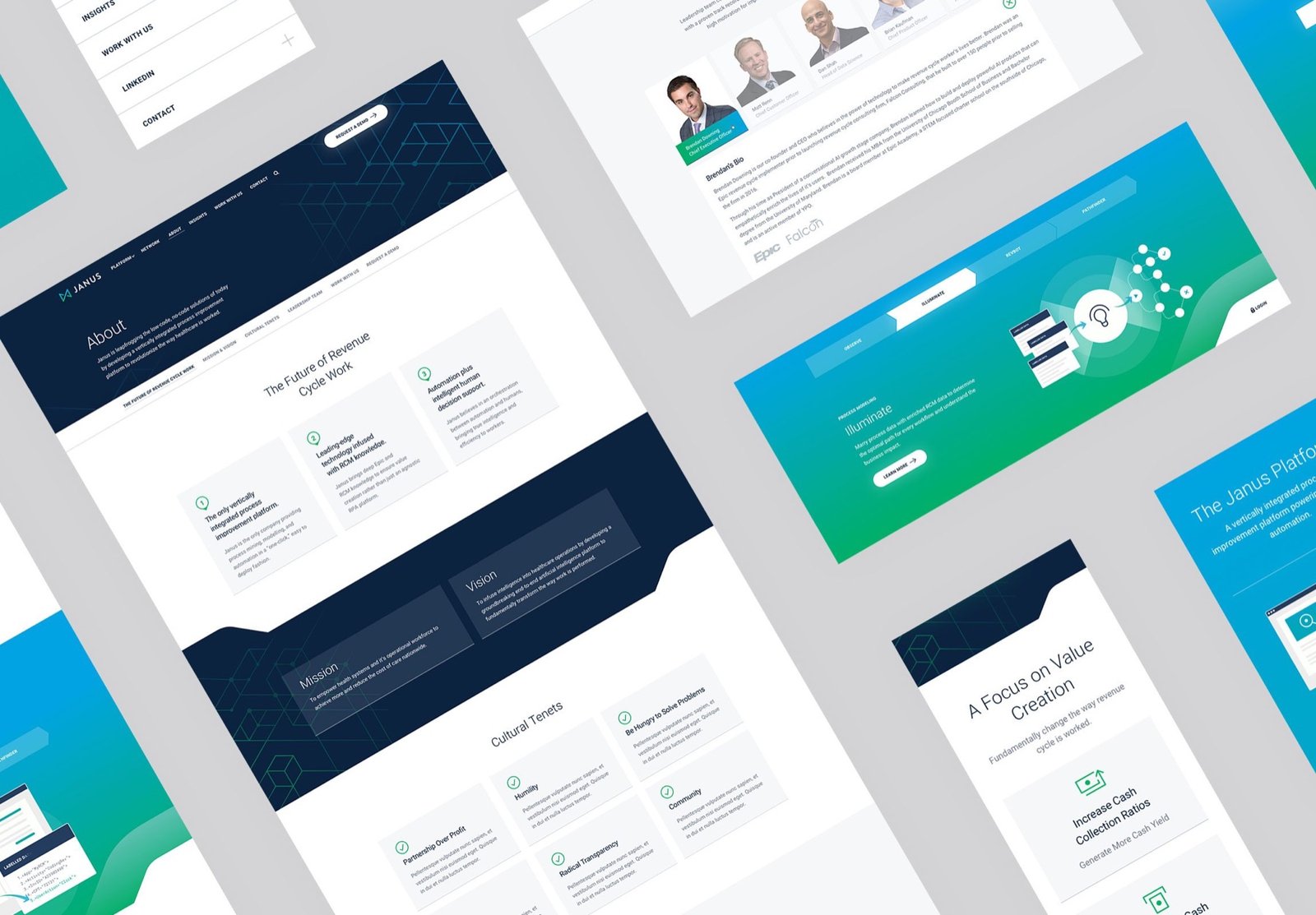
Janus Health is changing how the healthcare revenue cycle works - predictive decision support, automation, and real visibility into productivity for providers, aimed at increasing cash yield and cutting the cost to collect. The founding team came out of Epic and revenue-cycle operations, so the domain credibility was genuine. What did not exist yet was a brand.
Healthcare revenue cycle is not a category that sells itself. The audience is hospital finance leadership, the numbers are enormous and abstract - the industry burned through more than $256 billion in administrative waste in a single year - and every competitor makes broadly the same claim. A startup entering that room needs to look like it belongs there on the first slide, before anyone has evaluated the software.
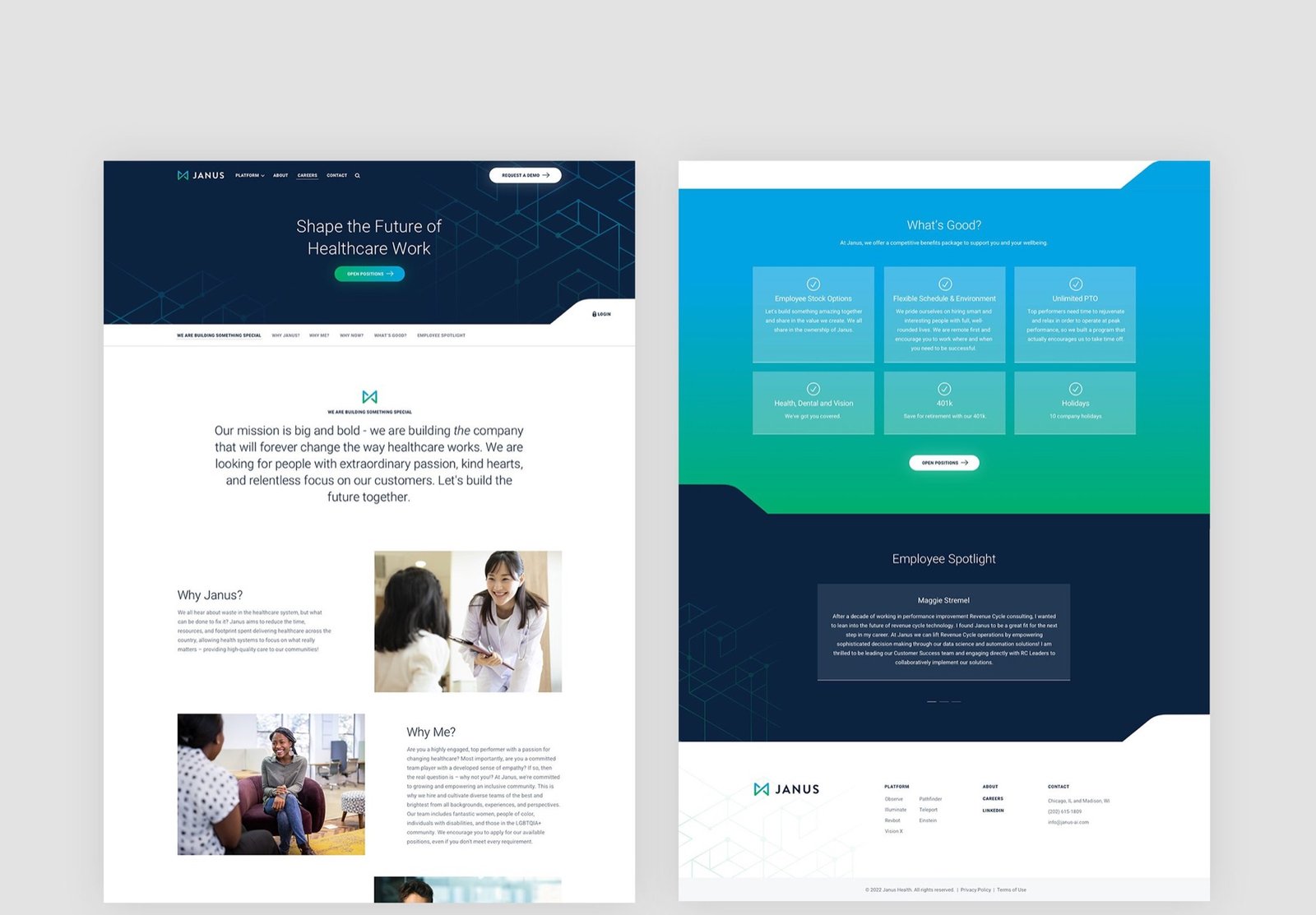
Working directly with the founder and CEO, we built the identity from the logo outward, then applied it across a long list of deliverables in sequence rather than all at once - visual identity, brand guidelines, website, presentation and pitch materials, a brochure system, and motion graphics.
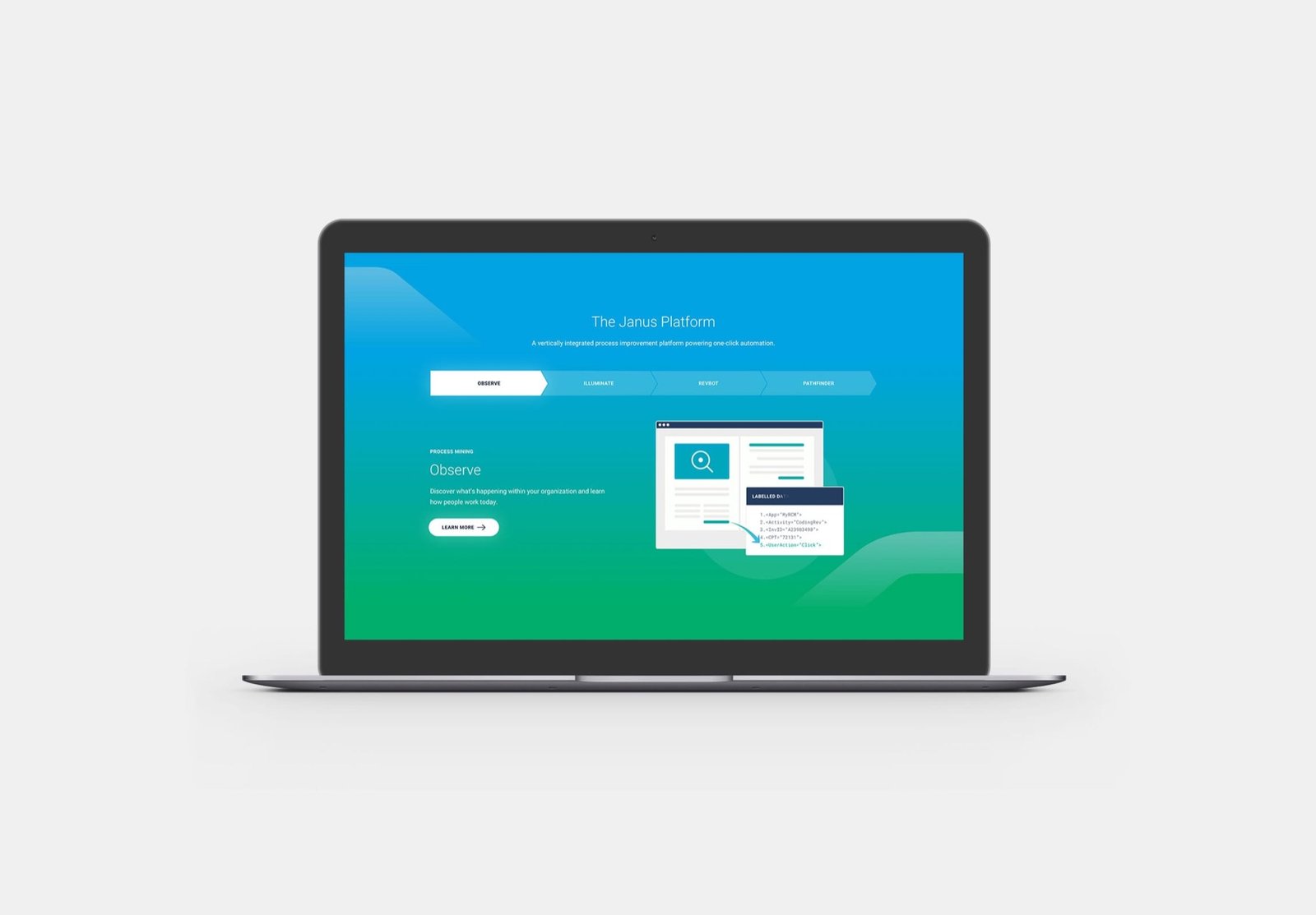
The design decision that mattered most was restraint. Healthcare technology branding tends toward either clinical coldness or stock-photo optimism. Janus needed to read as infrastructure - precise, calm, obviously built by people who have run this process themselves. Deep navy and a clear teal accent, generous space, diagrams that explain the platform rather than decorate it.
Building the guidelines and the brochure system alongside the identity meant the team could produce their own materials from day one. For a startup moving fast, a brand that requires an agency for every asset is a brand that gets abandoned.


With the brand established, the work moved to lead generation - and to the more interesting problem of converting cold traffic in a category where the buying cycle is long and the audience is sceptical by training.
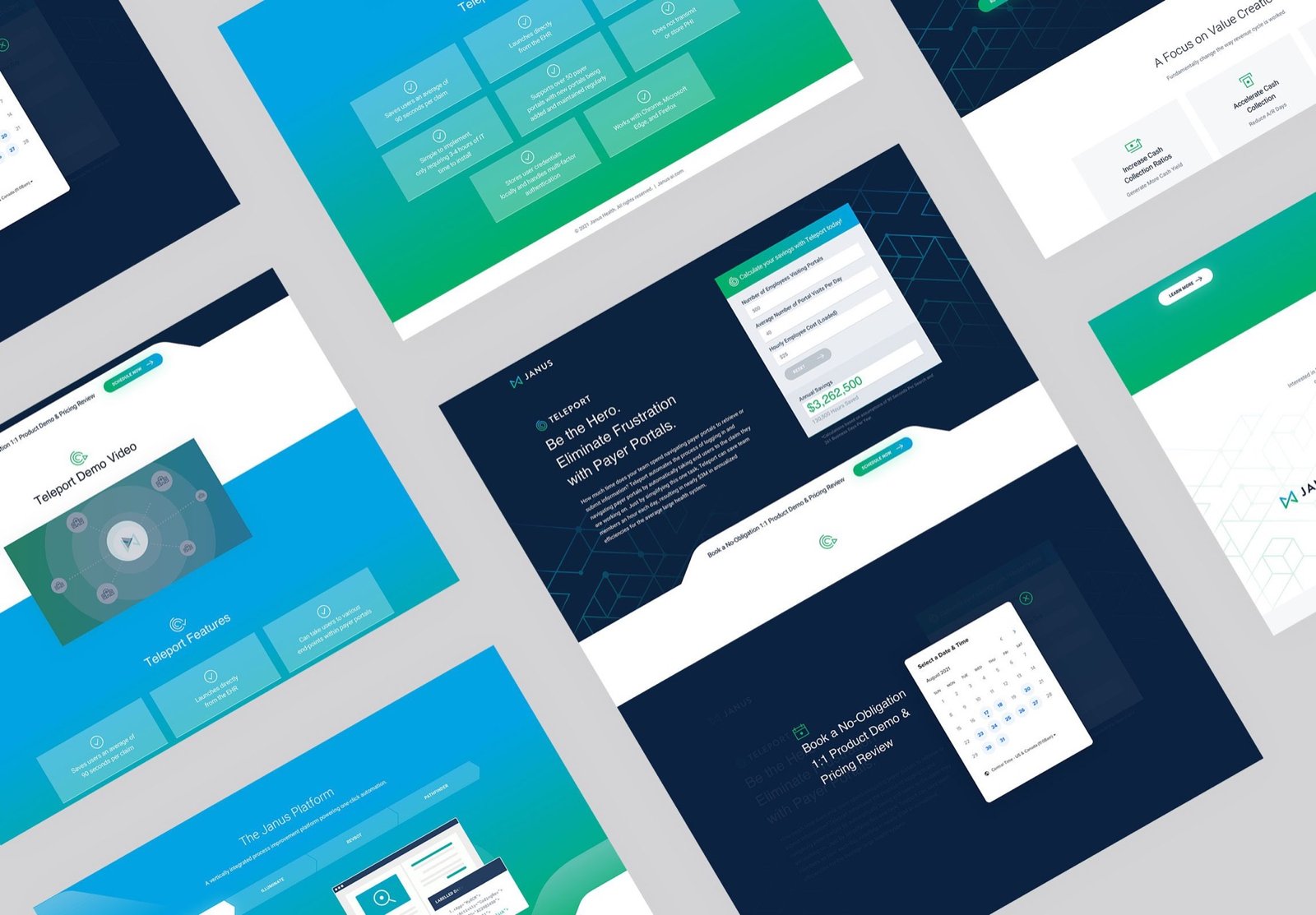
We built a dedicated landing page around an interactive cost-savings calculator. A hospital finance leader enters their own operational numbers and sees their own potential recovery, rather than reading a generic claim about someone else's results. It reframes the pitch from "we save money" to "here is what you specifically are leaving on the table" - and it qualifies the lead in the process, because anyone who completes it has told you the size of their problem.
Alongside it: a software demo video and a set of explainer animations, so the platform could be understood before a sales call rather than during one.
The calculator was not a marketing gimmick bolted onto a brochure site. It was the argument itself, made in the visitor's own numbers - which is the only version of that argument a CFO finds credible.
Janus went to market with a brand that read as established rather than emerging, a site that explained a complex platform without diagrams anyone needed a walkthrough to parse, and a lead-generation engine doing real qualifying work before sales ever picked up the phone.
The company grew fast afterward. The part we take from it is narrower and more portable: in a category where every competitor claims the same outcome, the differentiator is not a better claim. It is letting the prospect compute the answer themselves.